|
|||||||||||||||||||||||
|
Biographical
notes |
|
|||||||||||||||||||||
|
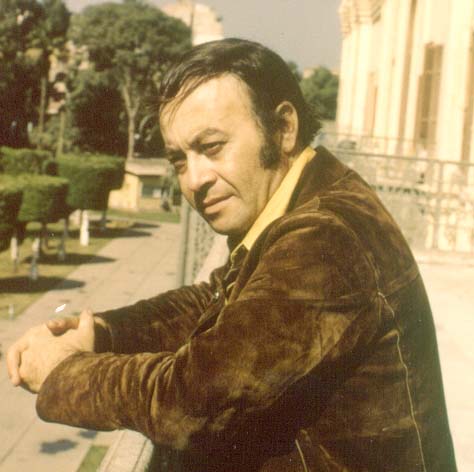
Nicolas Flagello was
one of the last composers to develop a distinctive mode of expression
based wholly on the principles and techniques of European late-Romanticism.
Born in New York City in 1928, Flagello grew up in a highly musical
family with deep roots in Old-World traditions. A child prodigy, young
Nicolas was composing and performing publicly as a pianist before
the age of ten. While still a youth, he began a long and intensive
apprenticeship with composer Vittorio Giannini, who further imbued
him with the enduring values of the grand European tradition. His
study continued at the Manhattan School of Music, where he earned
both his Bachelor's (1949) and Master's (1950) Degrees, joining the
faculty immediately upon graduation, and remaining there until 1977.
(During the 1960s he also taught at the Curtis Institute in Philadelphia.)
In 1955, he won a Fulbright Fellowship to study in Rome, and earned
the Diploma di Studi Superiori the following year at the Accademia
di Santa Cecilia, under the tutelage of Ildebrando Pizzetti. 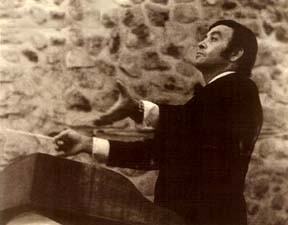
As a composer, Flagello
held with unswerving conviction to a view of music as a personal medium
for emotional and spiritual expression. This unfashionable view, together
with his vehement rejection of the academic formalism that dominated
musical composition for several decades after World War II, prevented
him from winning acceptance from the reigning arbiters of taste for
many years. However, gradually Flagello's works began to win enthusiastic
advocacy. |
|||||||||||||||||||||||